If you've been searching "GPS baby stroller" or "smart baby stroller in India", you've probably noticed something strange: there's almost no honest information about what these are, how they work, or whether they're worth it. This guide fixes that. We'll explain exactly what a GPS baby stroller is, how it differs from sticking an Apple AirTag to your existing pram, and why Indian parents in 2026 are increasingly buying them — especially if they travel by air, use crowded malls, or live in apartment buildings with shared parking.
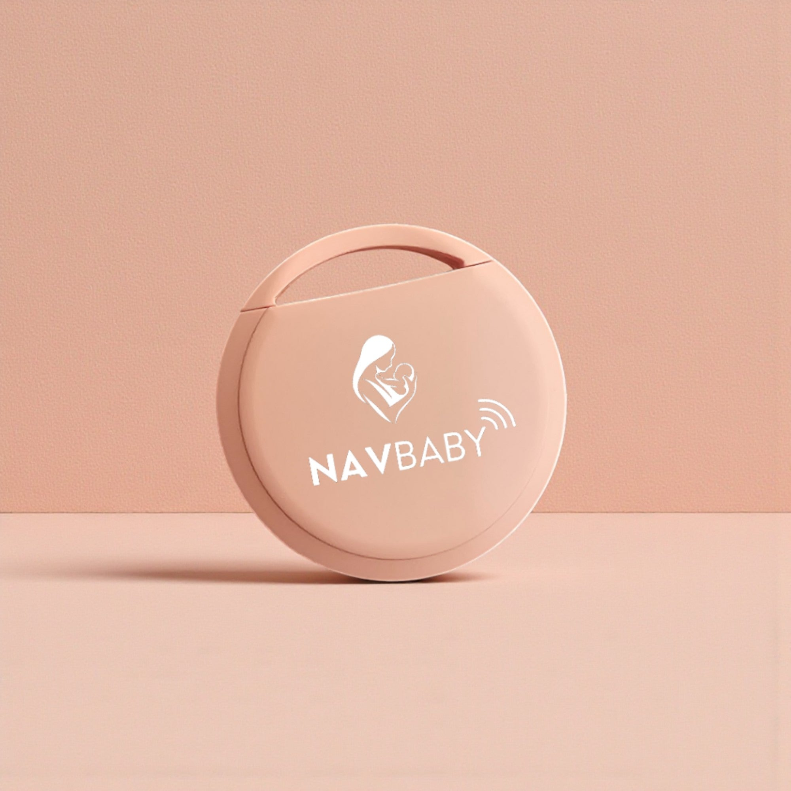
A GPS baby stroller is a stroller with a tracking device built directly into its frame. The most advanced versions — like the Hababy Ultra with NavBaby GPS — use Apple Find My and Google Find Hub networks, so you can locate the stroller anywhere in India on your iPhone or Android phone, with no SIM and no monthly subscription.
What Exactly is a GPS Baby Stroller?
A GPS baby stroller is a baby stroller that has a small tracking device permanently built into its frame — usually concealed inside the chassis tube or under the canopy mount. The tracker communicates with your phone (iPhone or Android) so you can see exactly where the stroller is on a map, in real time.
Three things make a stroller "GPS-enabled" rather than just "trackable":
- The tracker is integrated, not clipped on. A clip-on tracker can fall off, be removed, or stolen separately. A GPS stroller has the tracker sealed into the frame from the factory.
- It uses a real positioning network. The best GPS strollers in 2026 use Apple's Find My network and Google's Find Hub network — together these cover almost every smartphone in India, so the stroller is locatable across cities, airports, hotels and shopping malls.
- It's weather- and ride-rated. Indian summers, monsoons, and the bumps of a Mumbai footpath would destroy a generic Bluetooth tag. A purpose-built GPS stroller tracker is sealed to IP-rated standards.
How GPS Strollers Actually Work
Most people assume "GPS" means the stroller talks directly to satellites, like a car navigation system. In reality, modern GPS baby strollers use something far more energy-efficient and accurate in cities: the Find My and Find Hub crowdsourced location networks.
Here's the simplified version:
- The tracker inside the stroller emits a low-energy Bluetooth signal a few times per minute.
- Any nearby iPhone (Find My) or Android phone (Find Hub) anonymously detects that signal.
- Those phones quietly forward the location of the signal to Apple or Google over the internet.
- You open Find My on your iPhone or Find Hub on your Android phone, and see the stroller's last known location on a map.
This is the same technology that powers Apple AirTags, Tile trackers, and Samsung SmartTags — but a GPS stroller bakes it into the product so it can't fall off. In Indian cities like Delhi, Mumbai, Bengaluru, Hyderabad and Pune, where smartphone density is enormous, location updates typically arrive every few minutes with 5–10 metre accuracy.
Older GPS trackers used a SIM card and mobile data. They drained batteries in days, required a recurring plan, and stopped working if the SIM expired. Find My / Find Hub trackers last 12+ months on a coin-cell battery, need no SIM, and have no subscription — which is why every modern GPS baby stroller has moved to this model.
GPS Baby Stroller vs Apple AirTag vs Tile
"Why don't I just stick an AirTag on my existing stroller?" is the most common question we get. It's a fair question. Here's the honest comparison:
| Feature | GPS Stroller (NavBaby) | Apple AirTag | Tile Pro |
|---|---|---|---|
| Built into the frame | Yes | No (clip-on) | No (clip-on) |
| Works on iPhone | Yes (Find My) | Yes (Find My) | App only |
| Works on Android | Yes (Find Hub) | No native | App only |
| Removable / stealable | No | Yes | Yes |
| Anti-stalking alerts | Yes (paired to owner) | Yes | Yes |
| Weather-sealed | IP-rated | Splash only | IP-rated |
| Battery life | ~12 months | ~12 months | ~6 months |
| Subscription | None | None | Premium tier |
The honest takeaway: an AirTag works fine if you're an iPhone user and you don't mind that someone could simply unclip it. A purpose-built GPS baby stroller wins on three things — it can't be removed, it works on both iPhone and Android (so a partner with the other phone OS can also locate the stroller), and it's engineered for the bumps of Indian roads.
Why Indian Parents Specifically Need a GPS Stroller
In Western markets, GPS strollers are often marketed as a luxury "smart" feature. In India, they solve real, recurring problems for parents:
1. Airport gate-check anxiety
Every Indian parent who has flown IndiGo, Air India, Vistara or Akasa with a baby has had this moment: you hand the stroller over at the boarding gate, and the airline says it'll be returned at the destination — but at which gate, when, and was it actually loaded? A GPS stroller lets you confirm it's on your aircraft and watch it move with you.
2. Apartment building shared parking
In Mumbai, Bengaluru and Pune apartment complexes, strollers are often left near the lift lobby or in shared utility rooms. They get moved by housekeeping, taken by mistake, or simply misplaced — especially when there are several similar-looking strollers from neighbours.
3. Mall and crowded-event theft
Strollers parked outside food courts, kids' play zones, and at events like Diwali markets or Holi gatherings are easy targets. The deterrent effect of a GPS sticker on the frame is real — and if the worst happens, the stroller is recoverable.
4. Family hand-offs
In Indian families, the stroller often moves between grandparents, the parent on duty, and a nanny over the course of a single day. A GPS stroller means you always know where it is — useful when you need it back for the next outing.
5. Travel within India
Train journeys, hotel pickups, and pram rentals at heritage sites all involve handing the stroller over. GPS tracking means the stroller doesn't vanish into a railway porter's trolley or a hotel storage room.
Hababy Ultra with NavBaby GPS — India's First
The Hababy Ultra is currently the only baby stroller sold in India with a fully integrated GPS tracker built into the frame at the factory. The tracker, called NavBaby GPS, was engineered specifically for Indian conditions:
- Dual network: compatible with both Apple Find My (iPhone) and Google Find Hub (Android) — useful in Indian families where parents typically use different phone OSes.
- No SIM, no subscription: works out of the box, forever.
- Sealed inside the frame: not clip-on, not removable without a tool.
- Replaceable battery: 12–14 months per cell; user-replaceable.
- Owner-paired: if the stroller is sold or gifted, the GPS can be re-paired to a new owner.
- EN1888 European safety certified: the entire stroller, including the GPS module, has passed European baby product safety standards.
The Hababy Ultra is available across India at ₹7,999 with free shipping, COD, and a 7-day return policy. NavBaby GPS is included — not an add-on. See full product details →
What to Look for When Buying a GPS Baby Stroller
If you're shopping for a GPS-enabled or smart baby stroller in India, this is the buying checklist we use:
- Integrated, not clipped on. If the GPS is a clip-on accessory, it's not really a GPS stroller — it's a regular stroller with an AirTag stuck to it.
- Find My + Find Hub support. Single-network trackers (iPhone-only or Android-only) will eventually leave half your family unable to use the feature.
- No subscription. A monthly fee for stroller tracking is unjustifiable in 2026 — the technology no longer requires it.
- Replaceable battery. Sealed-battery trackers become e-waste in a year. Look for a coin-cell or AA design you can swap yourself.
- EN1888 safety on the whole stroller. The frame, brakes, and harness must meet European safety standards — the GPS feature is meaningless if the stroller itself isn't safe.
- Indian warranty and support. Stroller-specific GPS issues are best resolved by an Indian brand with WhatsApp support, not an imported electronics product line.
Frequently Asked Questions
What is a GPS baby stroller?
A baby stroller with a built-in GPS or Bluetooth tracker that lets you locate it on your phone in real time. The most advanced versions integrate with Apple Find My and Google Find Hub networks across India.
How is a GPS stroller different from a regular stroller?
A regular stroller has no electronics. A GPS stroller has an embedded tracker — usually concealed in the frame — that broadcasts location to your phone. The Hababy Ultra is India's first with NavBaby GPS built into the frame.
Do GPS strollers need a SIM card or monthly subscription?
Modern GPS strollers like the Hababy Ultra use Apple Find My and Google Find Hub. No SIM, no SMS plan, no monthly fee. Older GSM-based trackers do require a SIM and data plan.
What is the difference between a GPS tracker, AirTag, and Tile in a stroller?
AirTag and Tile are clip-on Bluetooth trackers. A purpose-built GPS stroller uses both Find My and Find Hub networks (iPhone + Android), is integrated into the frame so it can't be removed, and is rated for outdoor and Indian weather conditions.
Are GPS baby strollers safe for the baby?
Yes. The tracker uses low-energy Bluetooth — the same technology in wireless earbuds. It is sealed inside the frame, away from the baby, and emits less radiation than a smartphone. The Hababy Ultra carries EN1888 safety certification.
How accurate is GPS tracking for a baby stroller?
In Indian metros, location accuracy is typically 5–10 metres because of dense smartphone coverage on Find My and Find Hub. In low-density areas the network refreshes location less often, but the stroller is still trackable to the nearest neighbourhood.
Can airline staff or hotel staff steal a GPS stroller?
GPS tracking dramatically reduces theft risk. If a stroller is left at the boarding gate of an Indian airport or in a hotel lobby, you can locate it on your phone within minutes. Indian parents who travel frequently list anti-theft as the #1 reason they buy a GPS stroller.